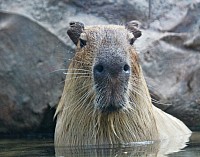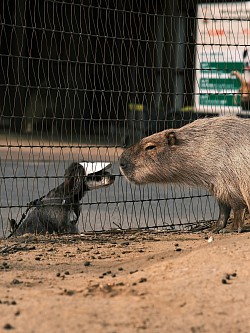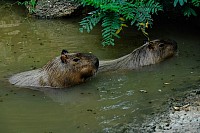
Capybara Funfacts!
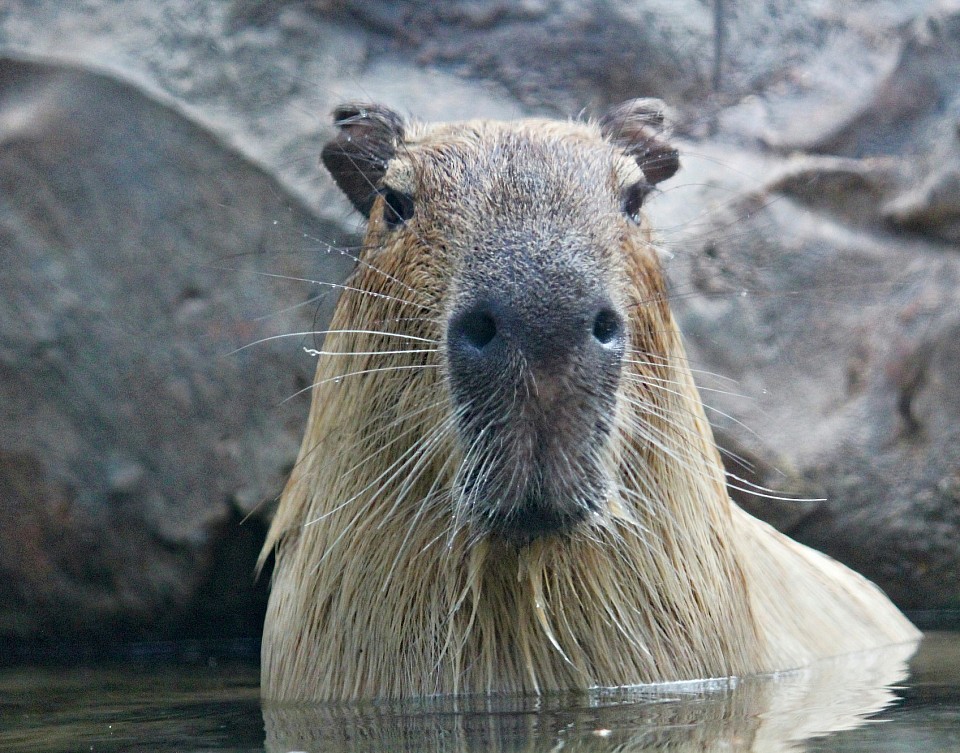
The capybara is the world’s largest rodent
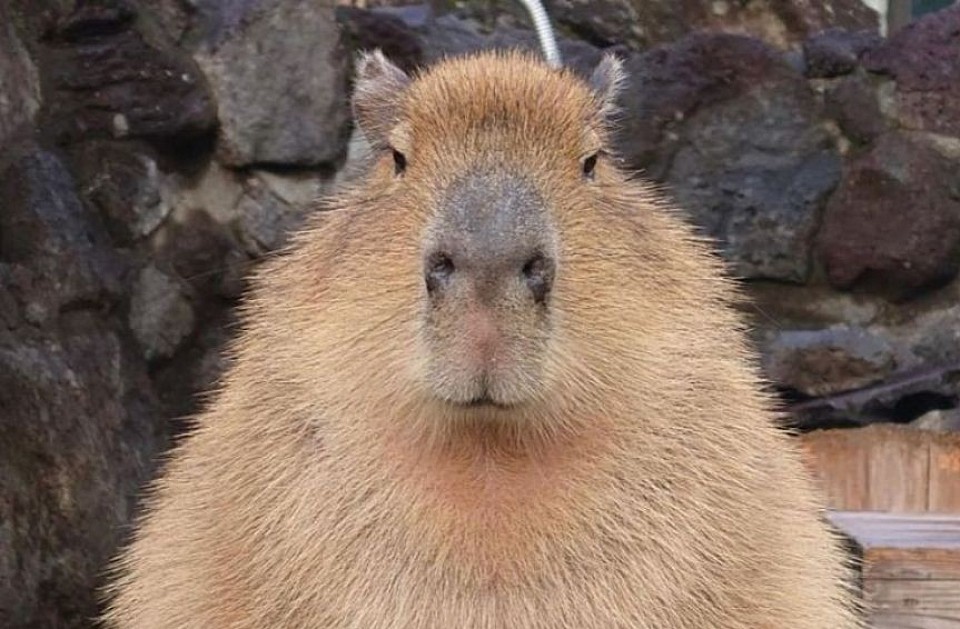
If you think beavers are big, wait until you see a capybara! These giant rodents weigh between 75 and 150 pounds (34 & 68 kg), making them twice the size of North American beavers. They are the biggest rodents in the world, growing up to 4.4 feet (1.34m) long and standing at least 2 feet tall (60cm).
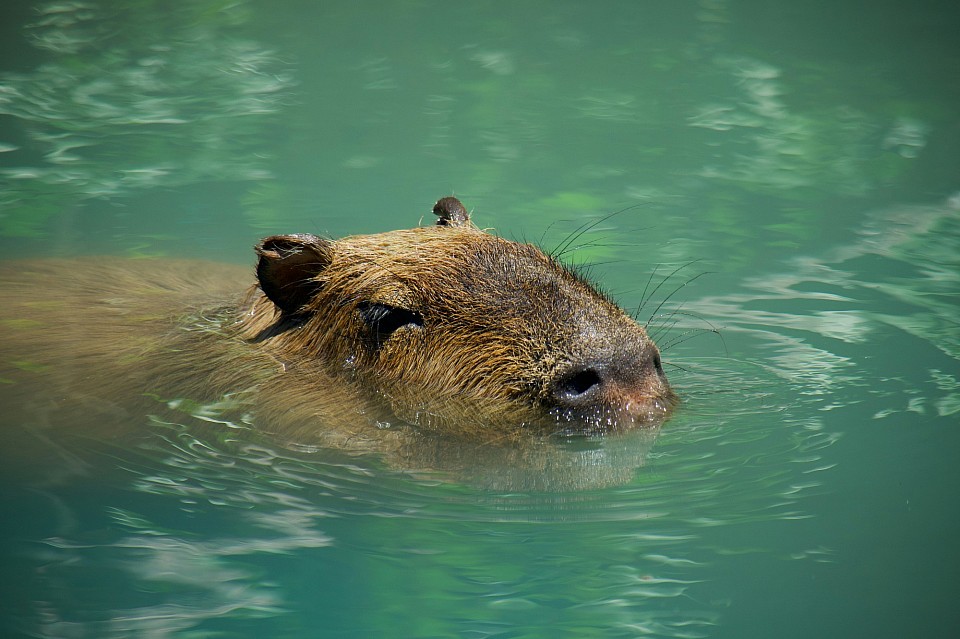
CAPYBARAS ARE FANTASTIC SWIMMERS
Capybaras can always be found living near bodies of water due to their semi-aquatic lifestyle. Along the banks of the Amazon River, these murky waters harbour many threats for a Capybara, but life by the water is still the perfect spot to set up camp—allowing them to retreat quickly and escape from predators like anacondas, wild cats and even eagles.
Webbed feet help them to maneuver in water, and their facial features are located towards the top of their large heads to help them see and breathe while they swim.
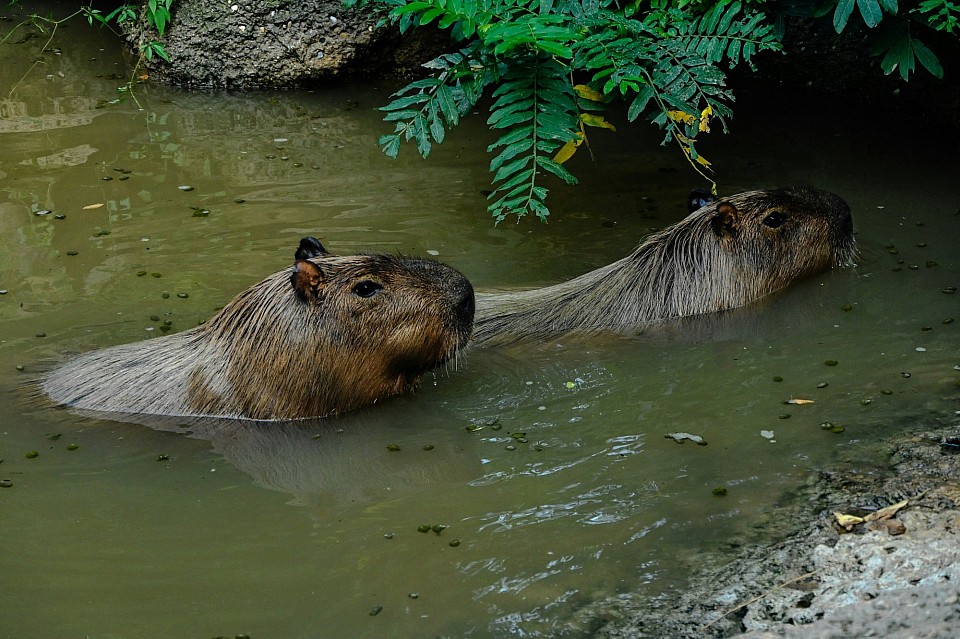
CAPYBARAS CAN SLEEP IN WATER
Capybaras can dive and stay underwater for up to 5 minutes at a time—often falling asleep in the water whilst keeping their nose at the edge of the banks. Napping along rivers, mangroves and marshes helps them to stay cool.
CAPYBARAS ARE VERY SOCIAL

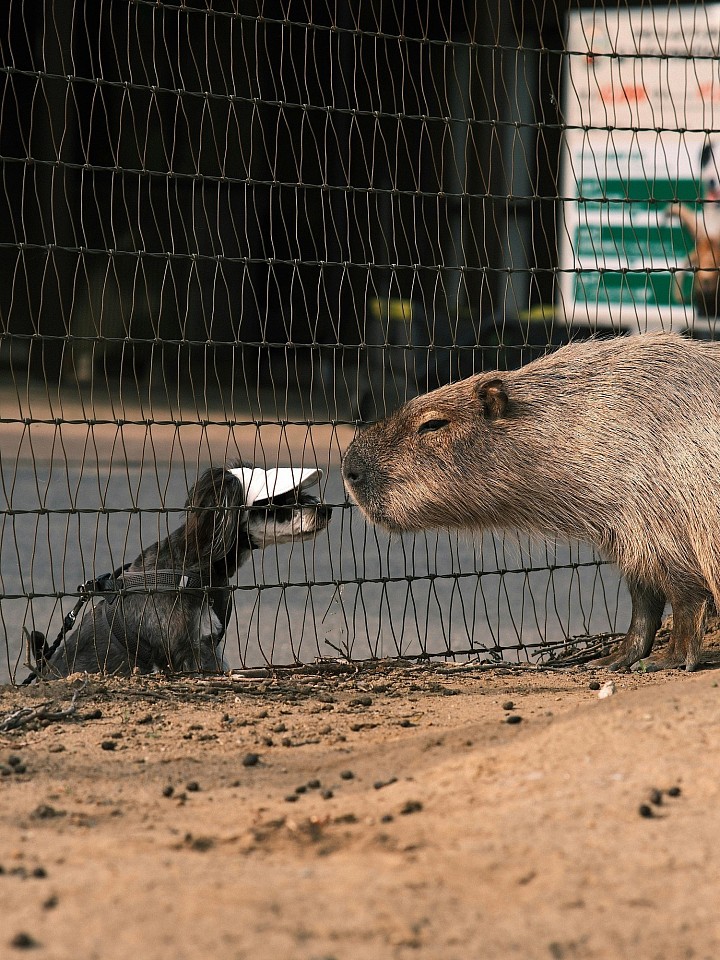
Capybaras are very social animals and love to play with each other and humans. In fact, they’re so friendly that they sometimes cuddle up to their owners in bed at night. They often enjoy playing with toys, especially balls and stuffed animals.
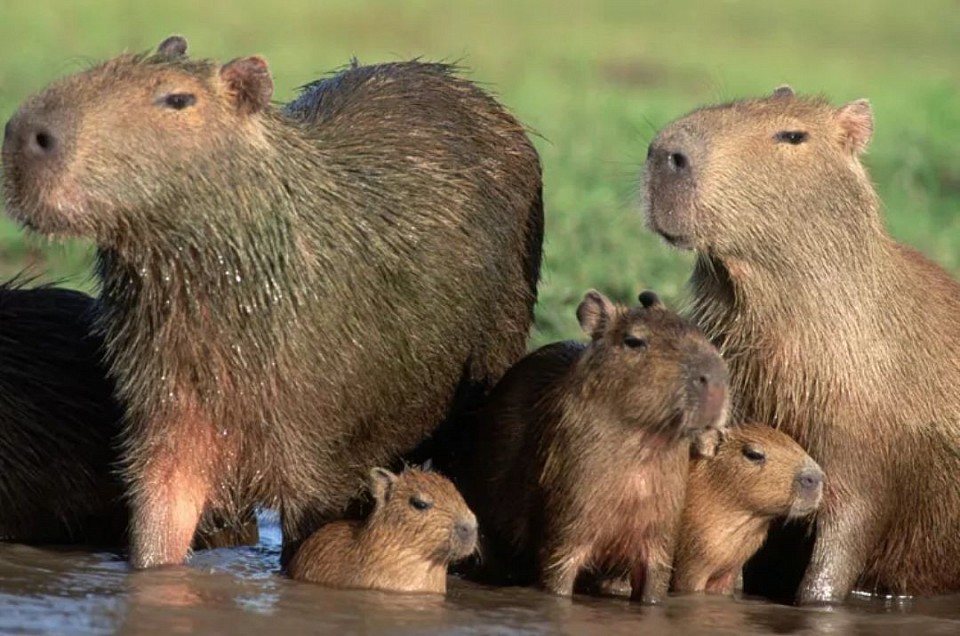
CAPYBARAS LIVE IN GROUPS
Capybaras are highly social animals that live in groups of around 10 to as many as 30 individuals. The groups are stable and work together to defend their habitat. The females raise their babies together, and young capybaras nurse from several moms. The herd also keeps a watchful eye on young capybaras who are more susceptible to predators.

CAPYBARAS TEETH DON'T STOP GROWING
Capybaras have two long front teeth. Like other rodents, these teeth never stop growing. Their incisors are strong and chisel-like, highly effective at cutting through grass. To keep their teeth a reasonable length, capybaras wear them down by grinding and chewing on food or bark. Their molars keep growing throughout their life but wear down from the constant grinding capybaras do to masticate their greens.
CAPYBARAS EAT POOP
Capybaras are autocoprophagous, meaning they eat their feces to get the most nutrition out of every meal. This practice, which they participate in each morning, provides them with bacterial flora essential to proper digestion. Because the grasses they consume are hard to digest, this process allows their bodies another chance to absorb the previous days’ fibrous meal.
CAPYBARAS ARE COMFORTABLE CHAIRS

Sometimes referred to as "nature's ottoman," capybaras have developed a reputation as being a nice place to take a load off. They have a mutualistic relationship with birds like the yellow-headed caracara who feed on insects from the rodents’ back while the rodent benefits from getting rid of the pesky bugs. Capybaras have a commensalistic relationship with birds like cattle tyrants, which travel with the large rodents to snag whatever insects they pick up.

AN ADULT CAPYBARA WEIGHS THE SAME WITH ADULT HUMAN
With an average weight of around 50 kilograms, these barrel-shaped mammals are certainly no field mice—weighing anywhere between 35 and 70 kilograms. Although female Capybaras are a little heavier than their male counterparts.
CAPYBARAS HAVE LIMITED PREDATORS
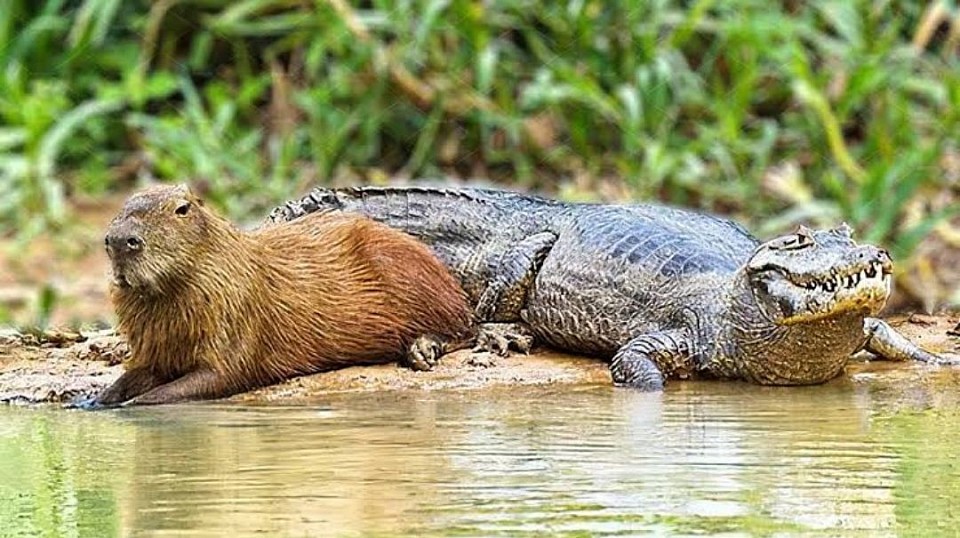
Capybaras are herbivores and have no natural prey. Their territories sometimes overlap with other animals but in those cases they just chase of any intruders and leave it at that. Their predators are limited, with the small group including jaguars, anacondas and harpy eagles to name a few.